Airbnb house rules: the nine you do not need to write
Airbnb already defines nine standard house rules and shows them to guests four times before arrival. What is left to write is smaller, and more specific.
By Larren Lee
In one sentence
Airbnb house rules are the conditions a guest agrees to when they book. Airbnb already defines nine standard categories that every guest accepts, and shows them in four separate places before arrival, so the job is not to write rules from scratch. It is to add the specific local detail that a generic category cannot express.
The nine rules Airbnb already writes for you
Almost every guide on this subject opens the same way: a long list of things you should forbid. That starts in the wrong place, because a good part of the work is already done and most hosts do not know it.
According to Airbnb's help centre on adding house rules, the standard categories are pets, events, smoking and vaping, quiet hours, check-in and checkout times, check-in method, maximum number of guests, commercial photography and filming, and Airbnb Services allowances.
Nine of them. Between them they cover most of what a typical host spends an afternoon writing out by hand.
Airbnb also publishes a separate set of ground rules for guests, which apply whether or not you write anything. And its page on what is expected of guests puts the obligation plainly: guests should "review and comply with all standard rules set by the host on the listing page, including check-in and checkout times, quiet hours, and restrictions on guest count, smoking, and pets."
So the useful question is not "which rules should I add". It is "what is left to say once all of that has been said".
Where guests see them before they arrive
This part surprises most hosts, and it changes how the rules should be written.
The same Airbnb page notes that house rules already appear in four places: your listing description, the booking terms at the moment of booking, the automated guest emails, and the Arrival Guide the guest receives before the trip.
Four times. Before they touch your door.
From that follows something uncomfortable for anyone who has drafted a long set of regulations: repeating the nine standard categories in full inside your welcome book is wasted space. The guest has already seen them. What they have not seen is how those categories work in your particular flat.
How to add or change them
The mechanics are simple enough that they are worth getting out of the way.
House rules live on the listing, not in the guest guide. You edit them from the listing editor, under the section for policies and rules, and the standard nine are toggles or short fields rather than free text. Anything beyond them goes in the additional rules field, which is where most hosts write too much.
Two things about editing them that matter more than the clicking.
A change applies to future bookings, not to reservations that are already confirmed. A guest who booked under your old checkout time agreed to that time, and tightening it afterwards is not something you can enforce retroactively. If you change a rule that affects someone already booked, message them.
And the additional rules field is free text, which is exactly why it fills up. Every incident adds a line, nobody ever removes one, and two years later there are thirty rules that no guest reads. More on that below.
The template: what to write for each rule
This is the part you can copy. For each standard category, what actually earns its place and the failure I see most often.
| Rule | What is worth writing | The mistake that makes it useless |
|---|---|---|
| Quiet hours | The exact time and the local reason. "No washing machine after ten, the bedroom below shares a wall with the utility cupboard." | "Please respect the neighbours" with no hour. That is a wish, not a rule. |
| Maximum guests | How many sleep there, and whether daytime visitors are fine. | Not separating a visitor from an overnight guest. It is the single most common source of disputes. |
| Smoking | Where "inside" starts. In a flat, the balcony usually counts. | A flat "no smoking" when the smoke from the balcony goes straight into the window above. |
| Pets | If allowed, where they cannot go and what happens with hair on the sofa. | Accepting them with no further detail, then finding the dog on the bed. |
| Check-in and checkout | The times, and what happens if the flight lands outside them. | Giving only the times. Half the messages you get are about the exceptions. |
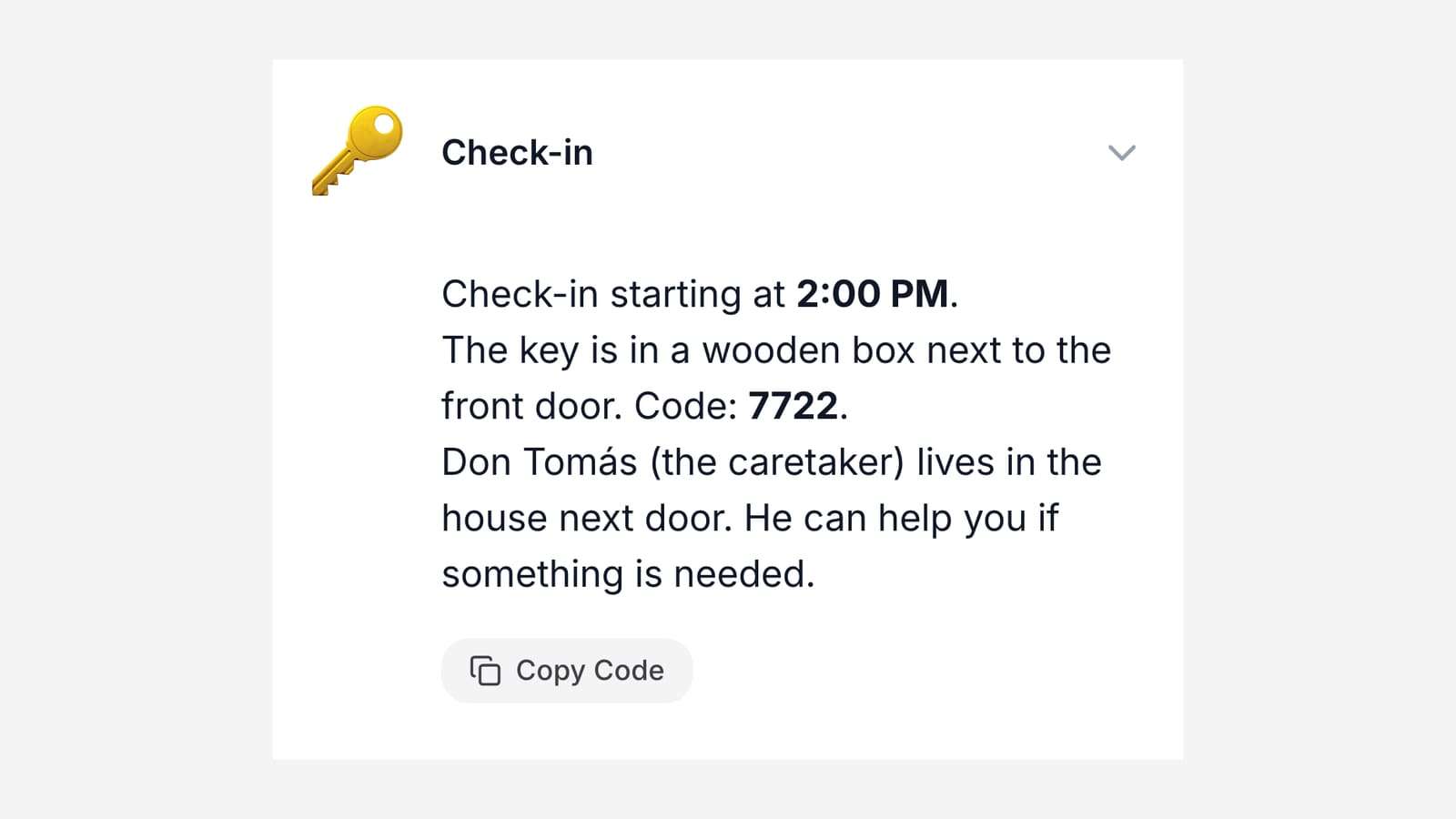
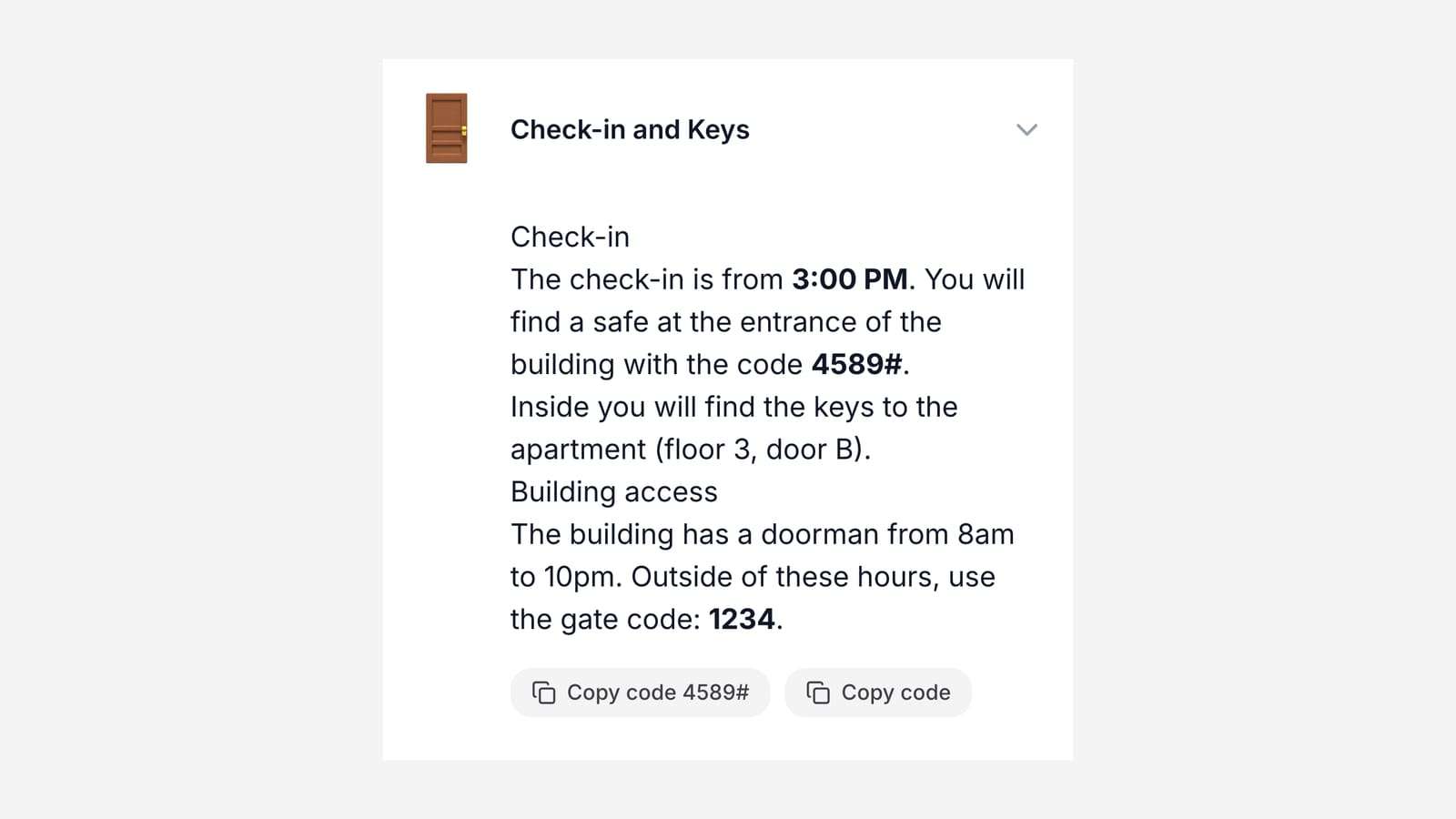
| Check-in method | The code, where the lockbox is, and what to do if the code fails. | Describing the entrance instead of showing it. One photo of the actual door saves a paragraph. |
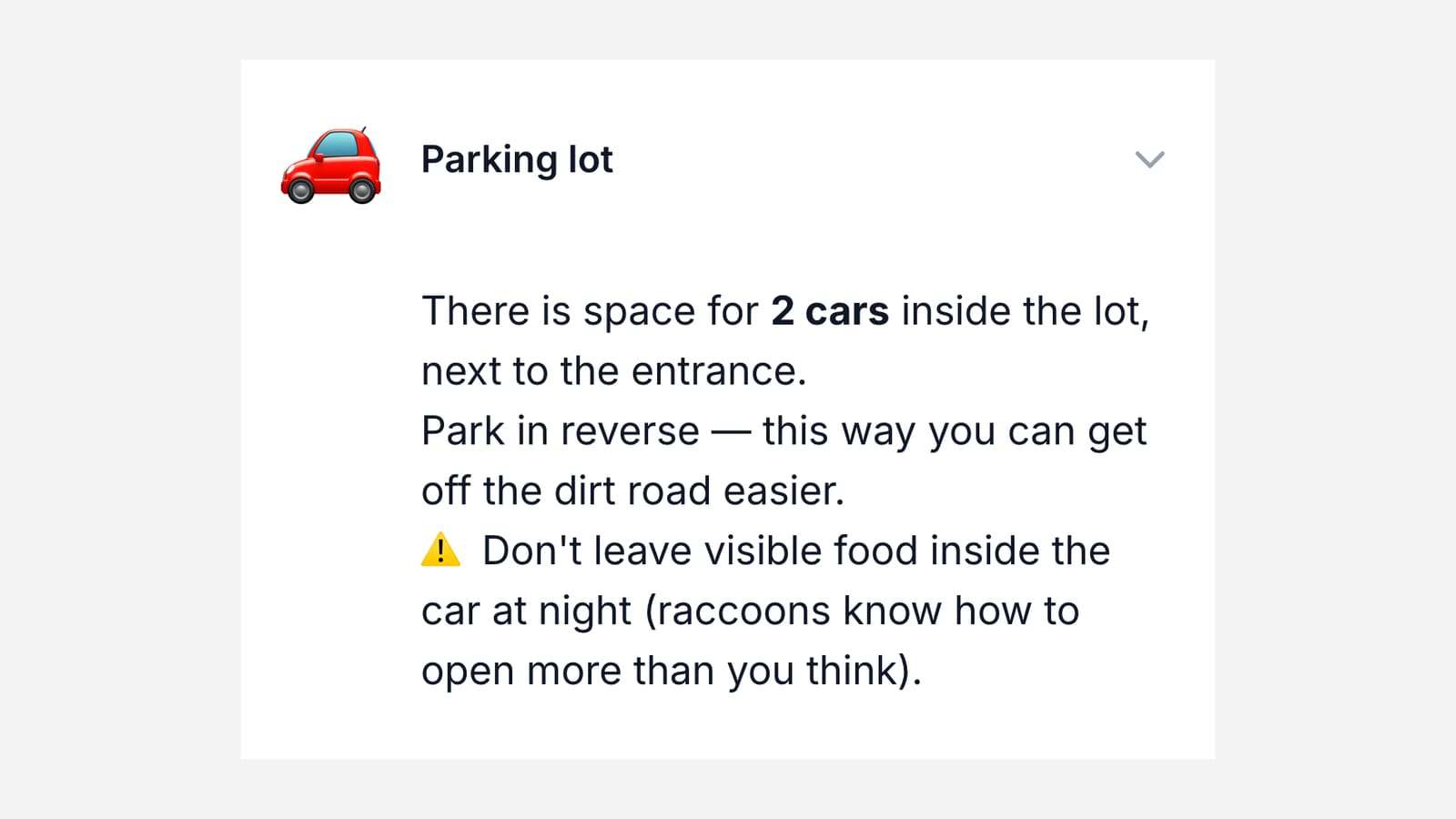
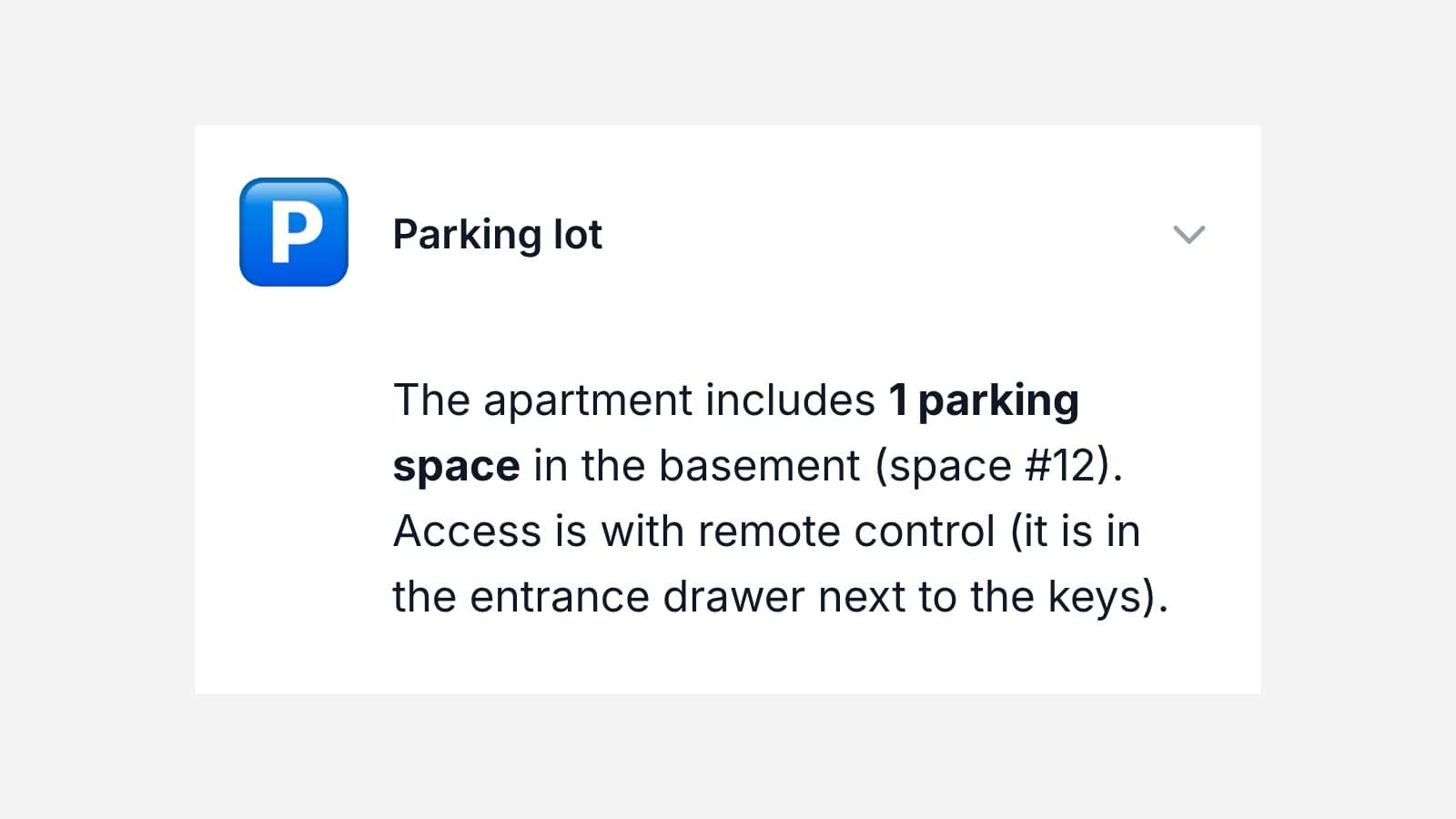
| Parking | The bay number, whether a permit is needed, and the street cleaning day. | Leaving out the cleaning day, which is how guests get a ticket they then pass to you. |
| Events | Whether any gathering is allowed and for how many people. | A "no parties" that does not say whether four friends having dinner counts. |
| Areas and equipment | Which room or appliance is off limits, and why. | Forbidding without explaining. A rule with a reason gets followed; one without gets tested. |
The middle column does the work. Notice that nearly every entry contains a local fact: an hour, a bay number, a day of the week, a neighbour. That is precisely what the standard category cannot know about your property.
What actually happens when a guest breaks one
This is the question hosts ask most and the one the templates answer least, usually because the honest answer is less satisfying than people expect.
Airbnb's own ground rules page describes the process. It says Airbnb "encourages hosts to promptly report violations of these ground rules", and that "actions we take may include providing information to guests about the policy and issuing warnings". For repeat cases it goes further: "when repeated or severe violations of these ground rules are reported, guests may also be suspended or removed from our community."
Read that carefully, because it tells you three practical things.
The first is that reporting matters. Enforcement runs on reports, so a rule broken and never reported is a rule that produced no record anywhere.
The second is that the first response is usually a warning, not a sanction. A single broken rule rarely ends a guest's account, and expecting otherwise leads to a lot of frustration.
The third is the one that changes how you write rules in the first place. Enforcement attaches to standard rules more cleanly than to custom ones, because the standard nine are what every guest agreed to at booking. A rule buried in your additional text is weaker ground than the same rule expressed through the category Airbnb already tracks. Where a rule can be expressed as one of the nine, express it there.
For your own additional rules, Airbnb's page points hosts to customer support rather than to an automatic process. That is worth knowing before you rely on a custom rule to recover money.
The safety line that is not really a rule
Of everything in this article, this is the cheapest section to write and the one most often missing entirely.
The US Fire Administration puts the stakes plainly: "When you hear a smoke alarm, you may have less than 2 minutes to get everyone outside and safe." Two minutes is not enough time to work out where the back door leads, in the dark, in a house you arrived at yesterday.
The same page gives the maintenance rule that belongs to you rather than to your guest: "Test smoke alarms every month and replace 9-volt smoke alarm batteries at least once every year."
Your safety lines are four. Where the smoke alarm is. Where the extinguisher is, if there is one. Where the stopcock and the fuse box are, because a burst pipe at two in the morning is more likely than a fire. And the local emergency number, written out, because a guest from another country does not know it and will not guess it.
That is not a rule and it should not read like one. It is information the guest hopes never to use, and it costs one paragraph.
Rules that cause more problems than they solve
Four patterns worth checking before you publish.
The endless list. A set of thirty rules does not get read, and a rule nobody read is a rule that only exists for arguing afterwards. If you have thirty, keep the eight that have actually caused you a problem at least once.
Contradictions. These accumulate in layers: the listing says one checkout time, the guide says another, the arrival message says a third. The guest keeps whichever suits them, and they are right to.
Rules you cannot verify. Forbidding something you cannot check without cameras inside the home is not a rule. It is an irritation that only the already well-behaved will follow.
Rules that are actually instructions. If the shower needs a particular turn to run hot, that is not a rule, it is an instruction, and it belongs in the appliance section of the house manual. Mixing the two makes both harder to read.
Where rules live, and where instructions live
Rules belong in two different places and it is worth not confusing them.
On the listing go the ones a guest needs in order to decide whether your place works for them before booking. If you do not accept pets, that cannot be a surprise discovered on arrival with the dog in the car.
In the guide go the ones they need during the stay. The washing machine hour, the parking bay, what to do with the rubbish on the day they leave. There they compete with nothing, because the guest is looking for information rather than deciding whether to book.
Timing matters as much as placement. A guide discovered on the kitchen table has already failed at the one moment it was most needed, which was the door. Sending it before arrival is what makes the rest work, and automating that message is the piece that holds it together.
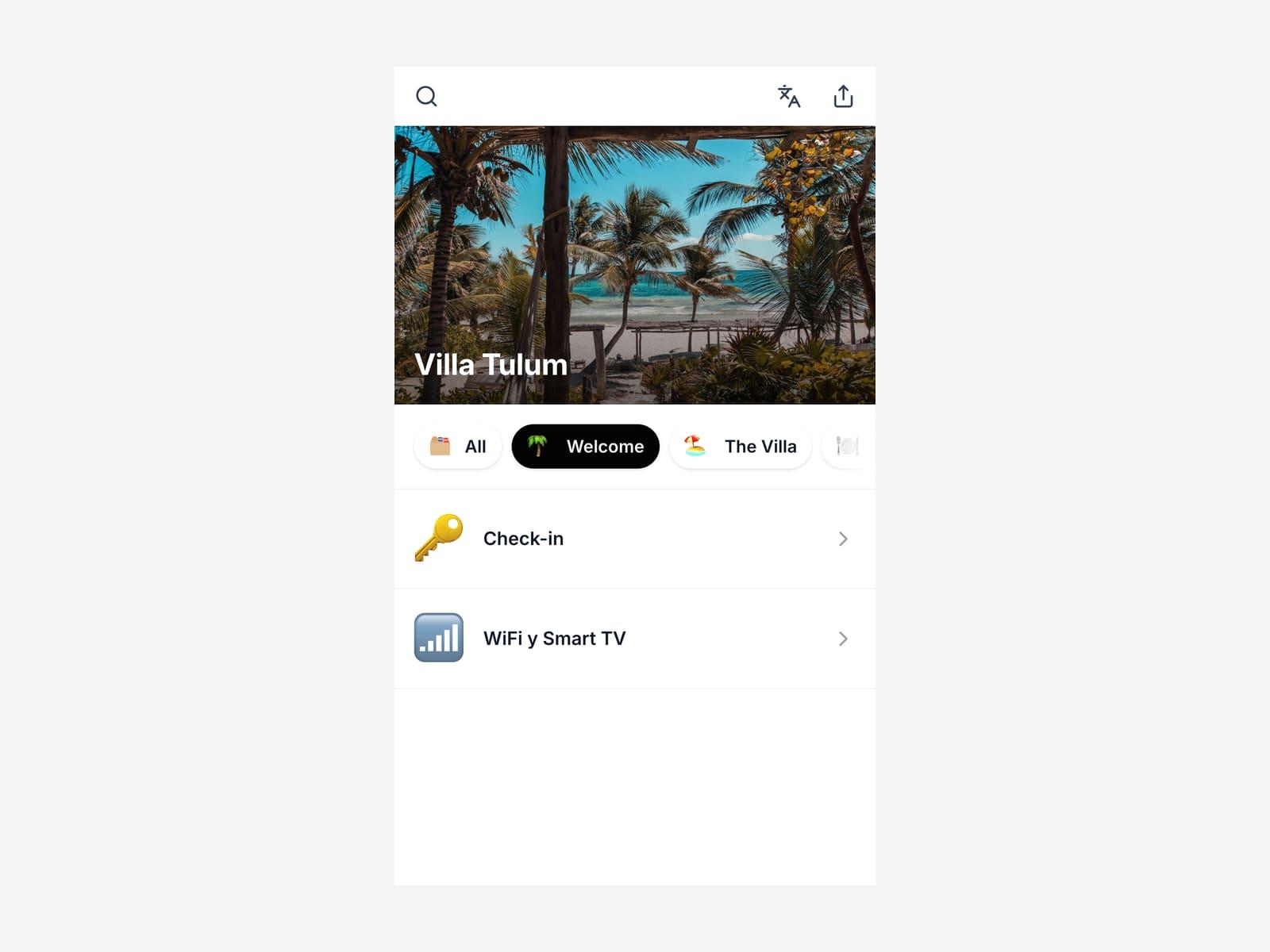
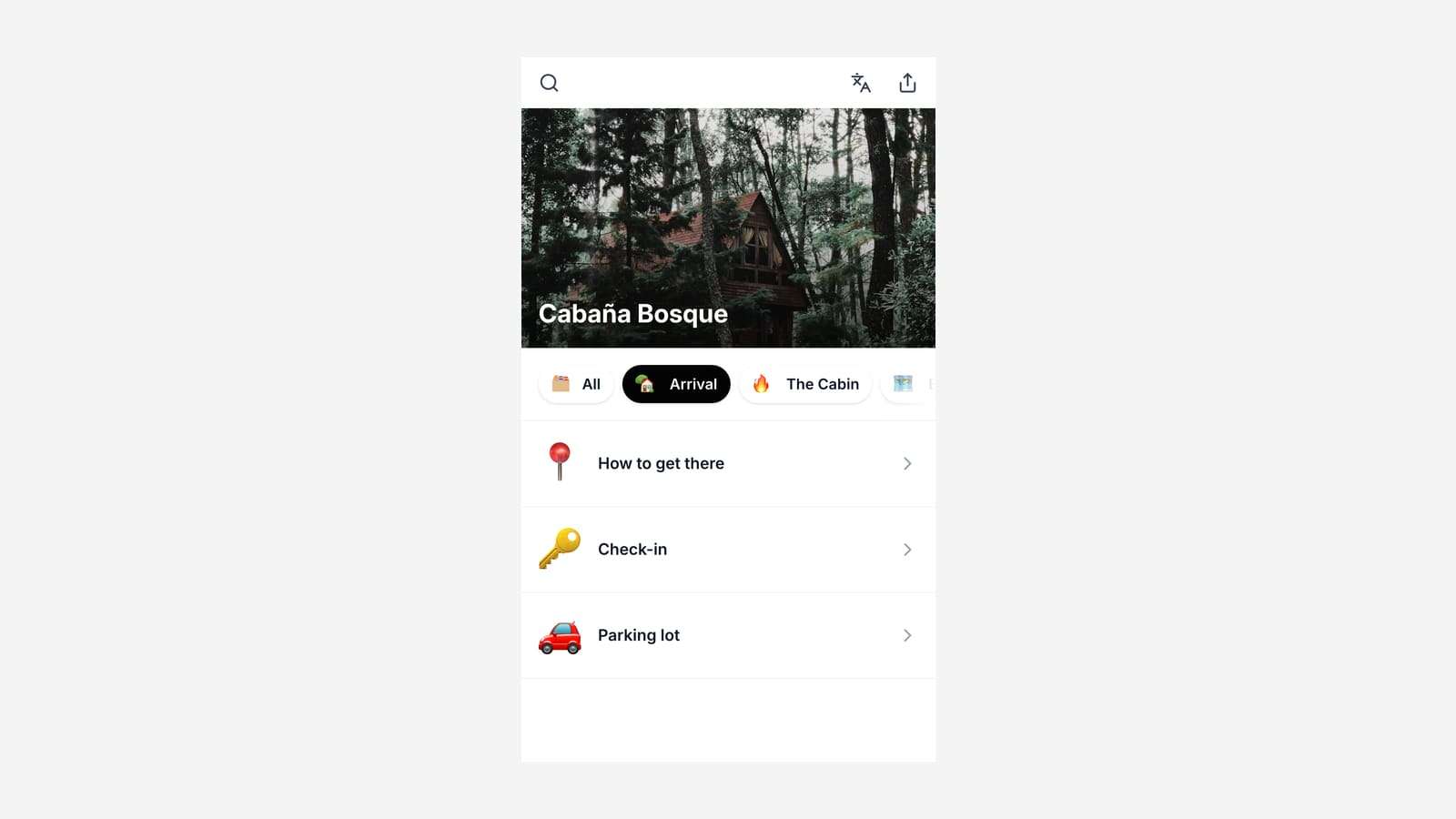
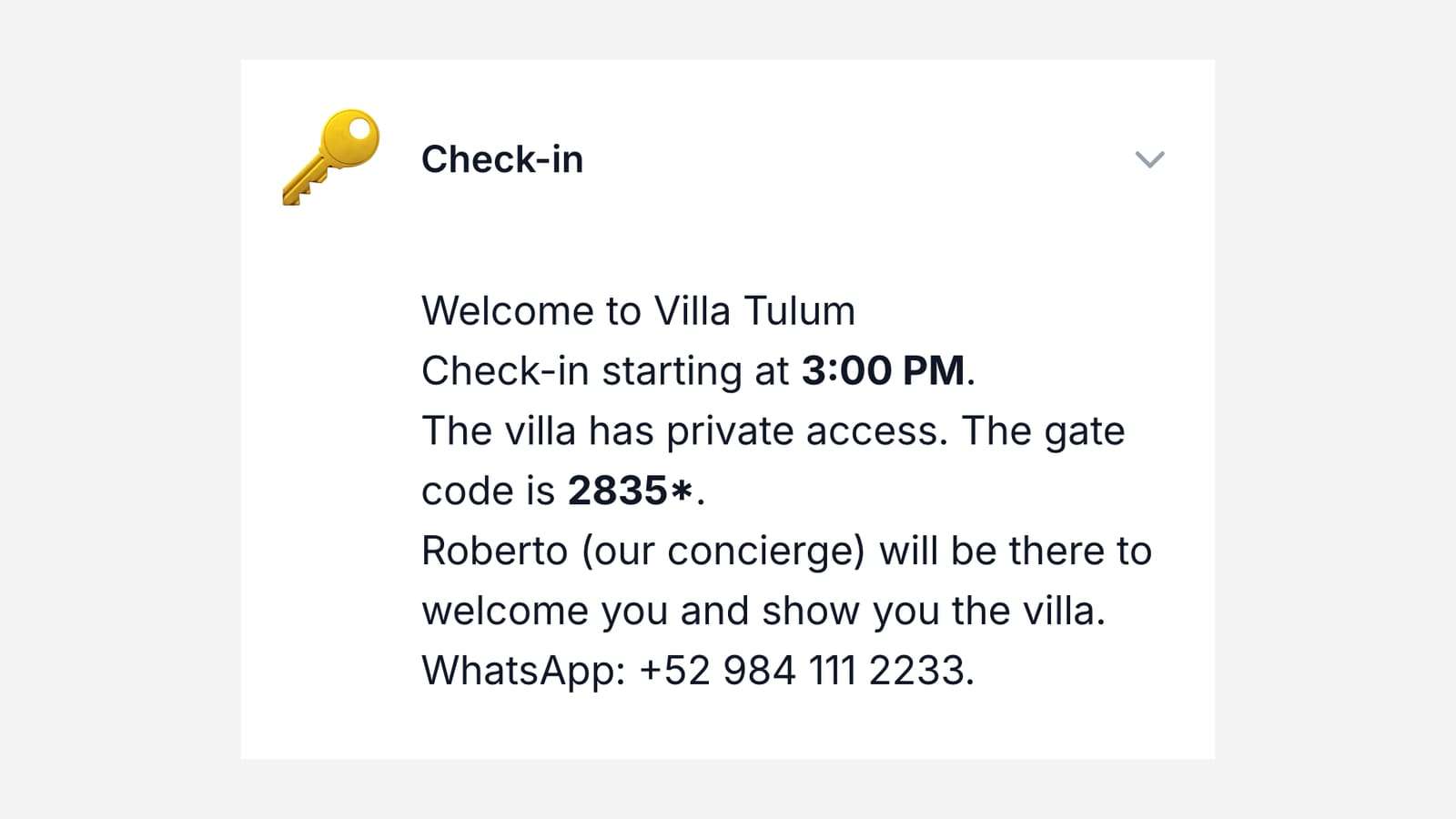
If you want to see how this reads on a phone before building your own, there is a live example here. It is a demo property, so the gate code is not real.
A full example, written out
The table says what to put. This is how it sounds once written, for a two-bedroom flat in a city. Copy it and change the facts.
Arrival and departure. Check-in from 3pm, checkout by 11am. If your flight lands earlier, message me and I can almost always store bags. If you need a later checkout I can confirm the night before, depending on whether anyone is booked in after you.
How many. The flat is set up for four. Daytime visitors are no problem; what I cannot do is people staying overnight who were not on the booking, because the building insurance goes by registered occupants.
Noise. The building sets quiet hours from 10pm to 7am. In practice the only things audible between floors are the washing machine and chairs being dragged, so avoiding those two at night is enough.
Smoking. Not inside, and the balcony counts as inside, because the smoke goes straight up into the window of the flat above and I have had a complaint about it. The building entrance is fine.
Pets. Welcome. I only ask that they stay off the beds; there is a folded blanket in the wardrobe for the sofa.
Parking. Bay 14, in the basement. The gate remote is in the kitchen drawer. They wash the basement on Tuesdays between 8 and 10am and ask for cars to be moved.
On the way out. Leave the keys on the table and pull the door shut behind you. Rubbish goes down the chute in the corridor. No need to wash up or strip the beds.
Three things to notice. Nearly every rule carries its reason. None of them threatens a charge. And the whole set reads in under a minute, which is all the attention you are going to get.
The rules that are not yours: the building
This barely appears in articles written for detached houses, and in a flat it is the source of most real friction.
If your property sits in a building with a management company, a residents' association or an HOA, there is a second rulebook you did not write and your guest has never seen. It usually covers quiet hours, use of common areas, visitor access, the pool, the lift, and sometimes it restricts or forbids short lets outright.
Three practical consequences.
The building rule can be stricter than yours. If you set quiet hours at eleven and the building sets ten, ten wins, and the complaint from the management company arrives at your door rather than the guest's.
There are rules a guest cannot possibly guess. That the pool closes at eight. That suitcases have to use the service lift after a certain hour. That visitors must be announced at the desk. None of that is on Airbnb or on your listing, and all of it is what actually produces the awkward phone call.
And the framing matters. A short line saying where the rule comes from does more work than the rule itself: "the building asks for X" is accepted far more easily than a restriction that looks like the host being difficult. People push back on arbitrary authority and comply with obvious constraints.
Read the building rules before you publish the listing, not after. Discovering that your association forbids short lets once you have bookings on the calendar is a considerably worse problem than a mediocre review.
The printed sign, and what belongs on it
"Airbnb house rules sign" is one of the most common searches on this topic, which tells you hosts want something physical on the wall. It is a reasonable instinct, and it works if the sign does a different job from the listing.
A framed list of prohibitions on the living room wall reads as a warning notice. It is the first thing the guest sees after a long journey, it sets a suspicious tone, and it photographs badly in reviews. If the sign only repeats what they already agreed to at booking, it costs goodwill and adds nothing.
What earns a place on a physical sign is the small set of things needed before the phone is useful.
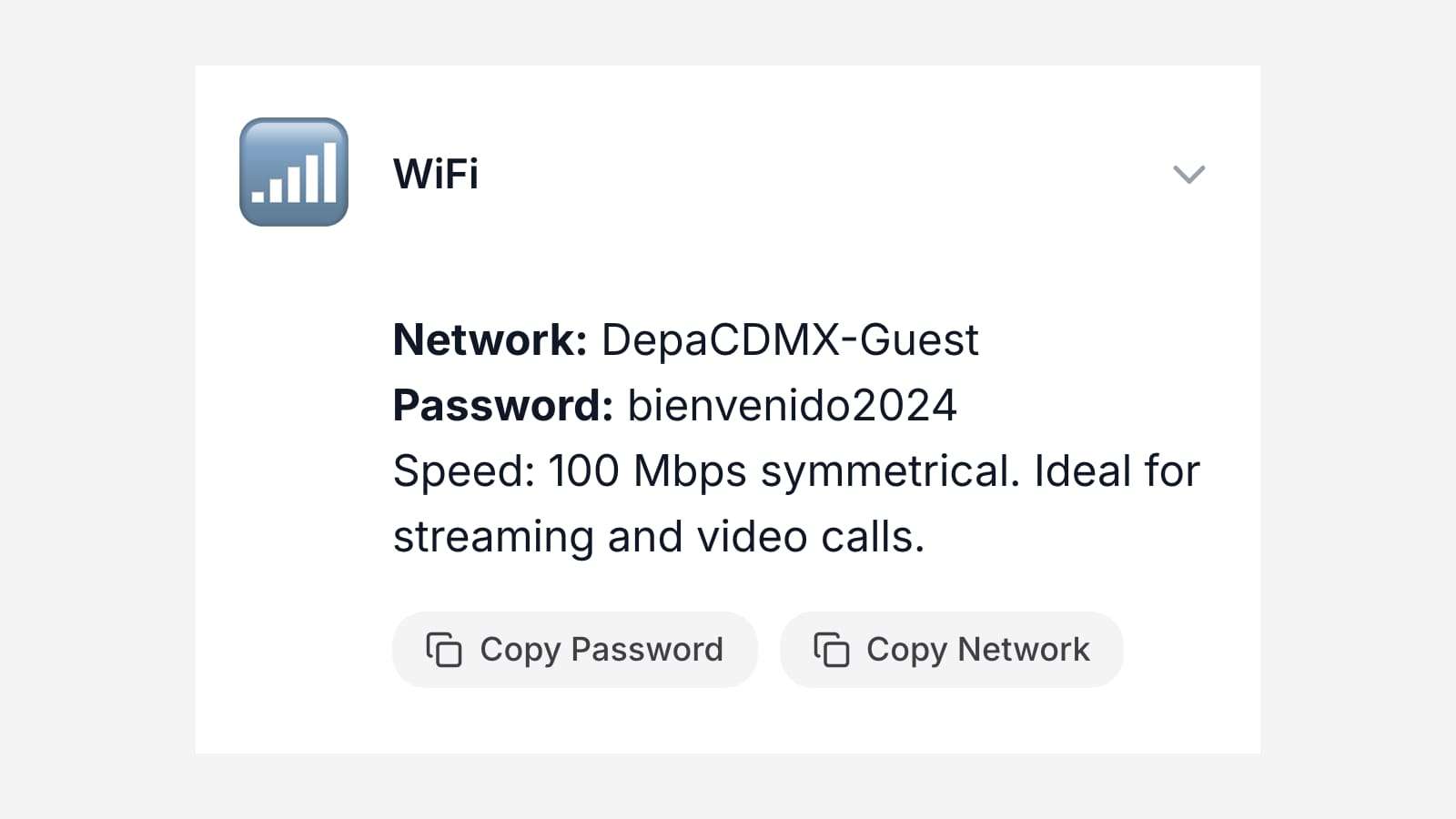
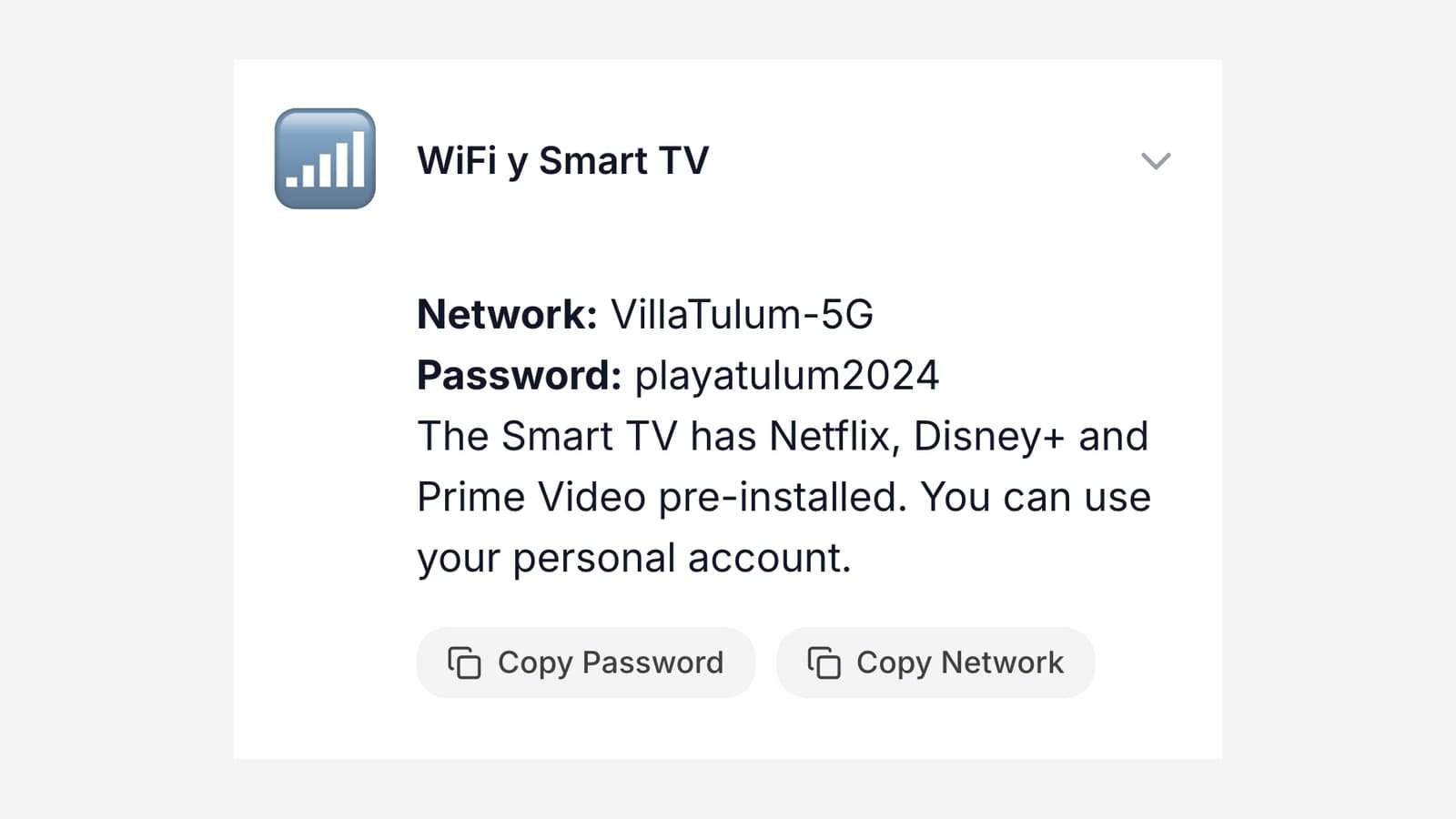
The wifi network and password, because until they have those, a digital guide is unreachable. That one item justifies the sign on its own.
The checkout time and the two or three things you actually want done on the way out. Not nine chores. Ask for three and they get done; ask for nine and none do.
Where the emergency information lives, or the information itself if there is room. A guest looking for the stopcock at two in the morning is not going to scroll.
And a way to reach you. A phone number or a QR code that opens the guide.
Everything else belongs on the listing, where it is agreed to, or in the guide, where it can be searched and corrected. A sign cannot be updated when the wifi password changes, which is the single most common reason the sign on the wall ends up being wrong.
If you print one, keep it small and put it where it is needed rather than where it is seen. The wifi card belongs next to the router or on the fridge; the checkout note belongs by the door.
Writing them so they get followed
Three things separate a rule that works from one that gets ignored, and none of them is strictness.
The reason. A rule with an explanation gets followed far more often than an order. "No washing machine after ten, because the utility cupboard backs onto the neighbour's bedroom" works better than "no washing machine after ten". You are giving the guest what they need to make a good decision rather than a rule to memorise.
The exception. Almost every rule has an edge case the guest will find. What happens if the flight lands at one in the morning? What if there are five people but one is a baby? Answering it in writing saves the message.
The practical consequence. Not a threat, but what happens next. "Checking out after eleven means half a night's rate" is a rule. "Additional charges may apply" says nothing at all, and a guest who reads it learns only that you were vague on purpose.
If you are rebuilding the whole guide rather than just the rules, here is how to structure it so it can be searched instead of read end to end, and what belongs in each section.
A short version, if you write nothing else
Set the nine standard categories on the listing, because those are the ones that carry weight when something goes wrong. Add local detail only where the category cannot express it: an hour, a bay, a neighbour, a day of the week. Say why. Answer the obvious exception. And put the four safety lines somewhere the guest can find in the dark.
That is a shorter set of rules than most listings carry, and it holds up better, because every line in it is one you can point at afterwards.
Sources
- Airbnb Help Centre, Add house rules to a listing: the nine standard categories and the four places guests are shown them.
- Airbnb Help Centre, Ground rules for home guests: what every guest agrees to, and what enforcement actually involves.
- Airbnb Help Centre, What's expected of guests: the obligation to review and comply with standard rules.
- US Fire Administration, Smoke Alarms: monthly testing, annual battery replacement, and the two-minute figure.