The Airbnb welcome book template, section by section
A welcome book template you can copy, what belongs in each section, the nine house rules Airbnb already standardises, and the safety page most hosts skip.
By Rodrigo Hernández
Co-founder of HostCompass. Builds the product with LatAm hosts: fewer midnight WhatsApps, better communication reviews.
In one sentence
An Airbnb welcome book is the document that answers your guests' questions before they ask them: how to get in, what the WiFi password is, how the appliances work, what the house rules are, and what to do in an emergency. The good ones are organised around what guests look for first, not around what the host finds easiest to write.
What an Airbnb welcome book actually is
The name causes more confusion than it should. A welcome book, a guest guidebook, a house manual and a welcome binder are all the same object with different levels of ambition. Some hosts mean a laminated folder on the kitchen counter. Others mean a web page behind a QR code.
What matters is the job it does. Your guest arrives at an unfamiliar door, often at night, often after a flight, and needs three things in the first ten minutes: to get inside, to connect to the internet, and to know whether they can put their shoes on the sofa. Everything else can wait until morning.
That framing decides the structure. A welcome book is not a brochure about your property. It is a reference document consulted under mild stress, on a small screen, by someone who did not read it in advance and will not read it start to finish now.
I keep coming back to that last point because it is the one most templates ignore. Guests do not read a welcome book. They search it.
The template, section by section
Here is the structure, with what belongs in each part and the failure mode I see most often. Copy it, delete what does not apply to your property, and keep the order.
| Section | What goes in it | The mistake to avoid |
|---|---|---|
| Welcome note | Two or three sentences. Your name, the fact that you are reachable, and how. | Writing a page of prose about your love of hospitality. Nobody reads it and it pushes the useful parts down. |
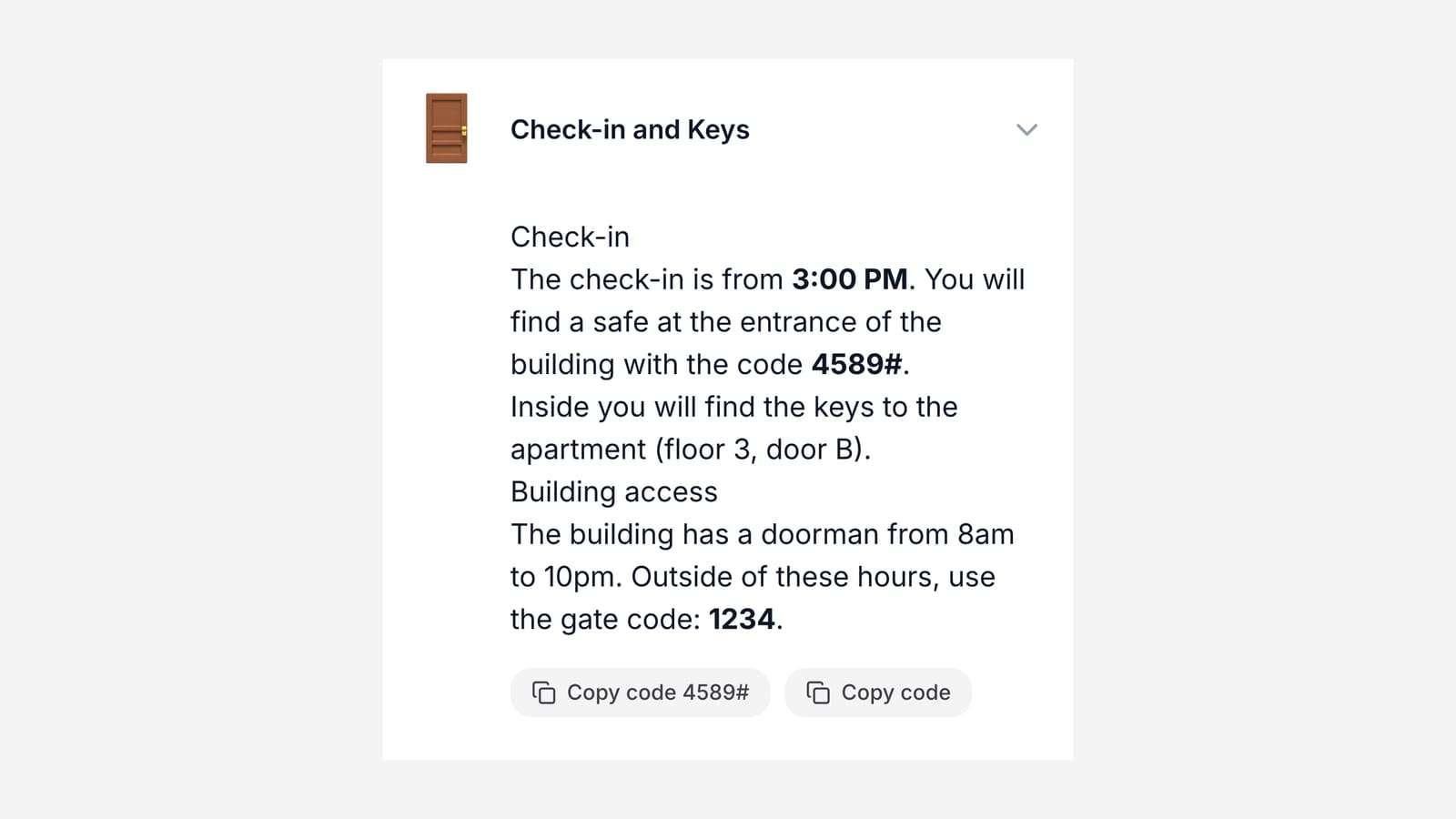
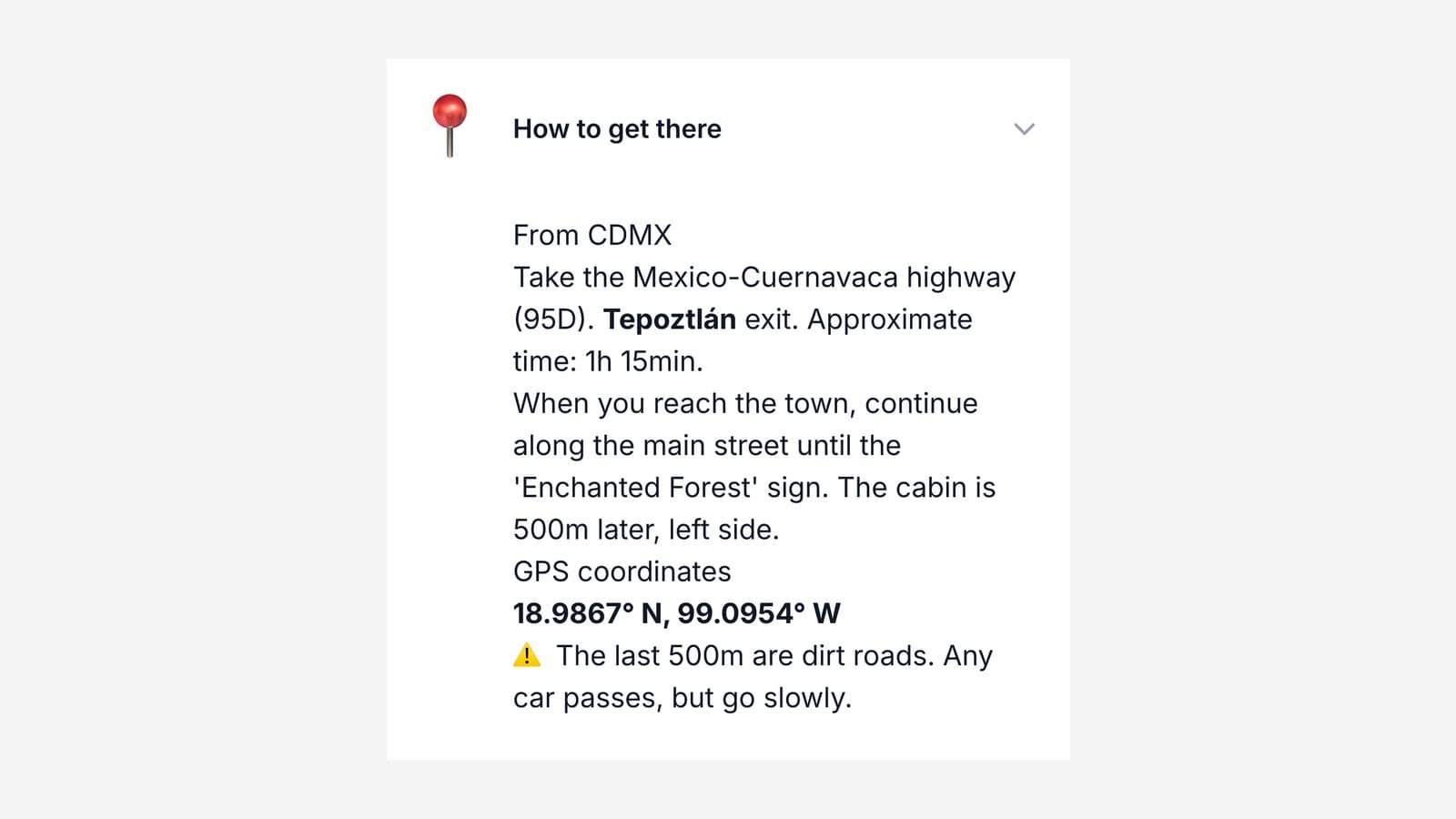
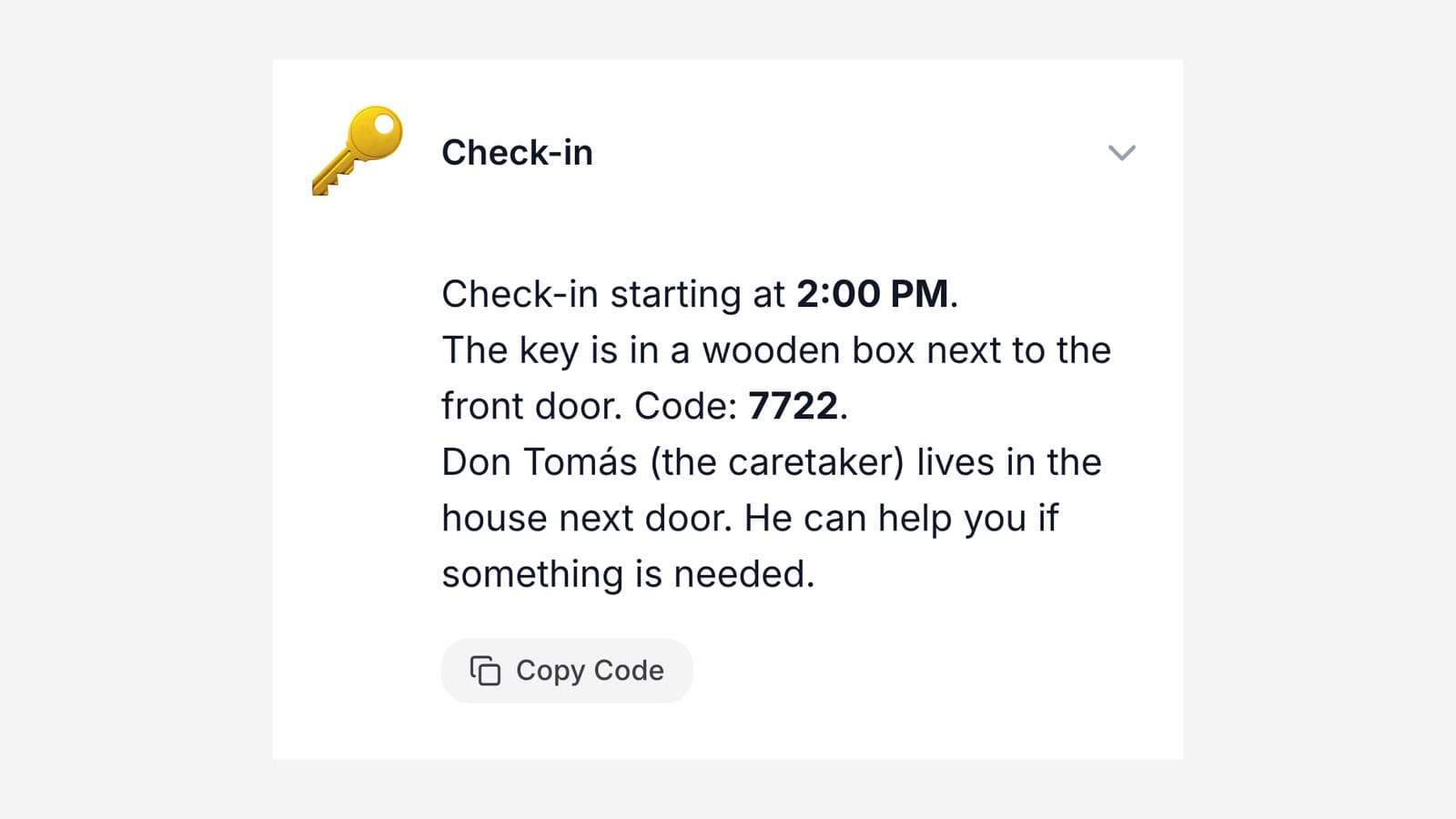
| Getting in | Exact address with a map link, the door or gate code, where the key is, and what to do if the code fails. | Describing the entrance instead of showing it. One photo of the actual door beats a paragraph. |
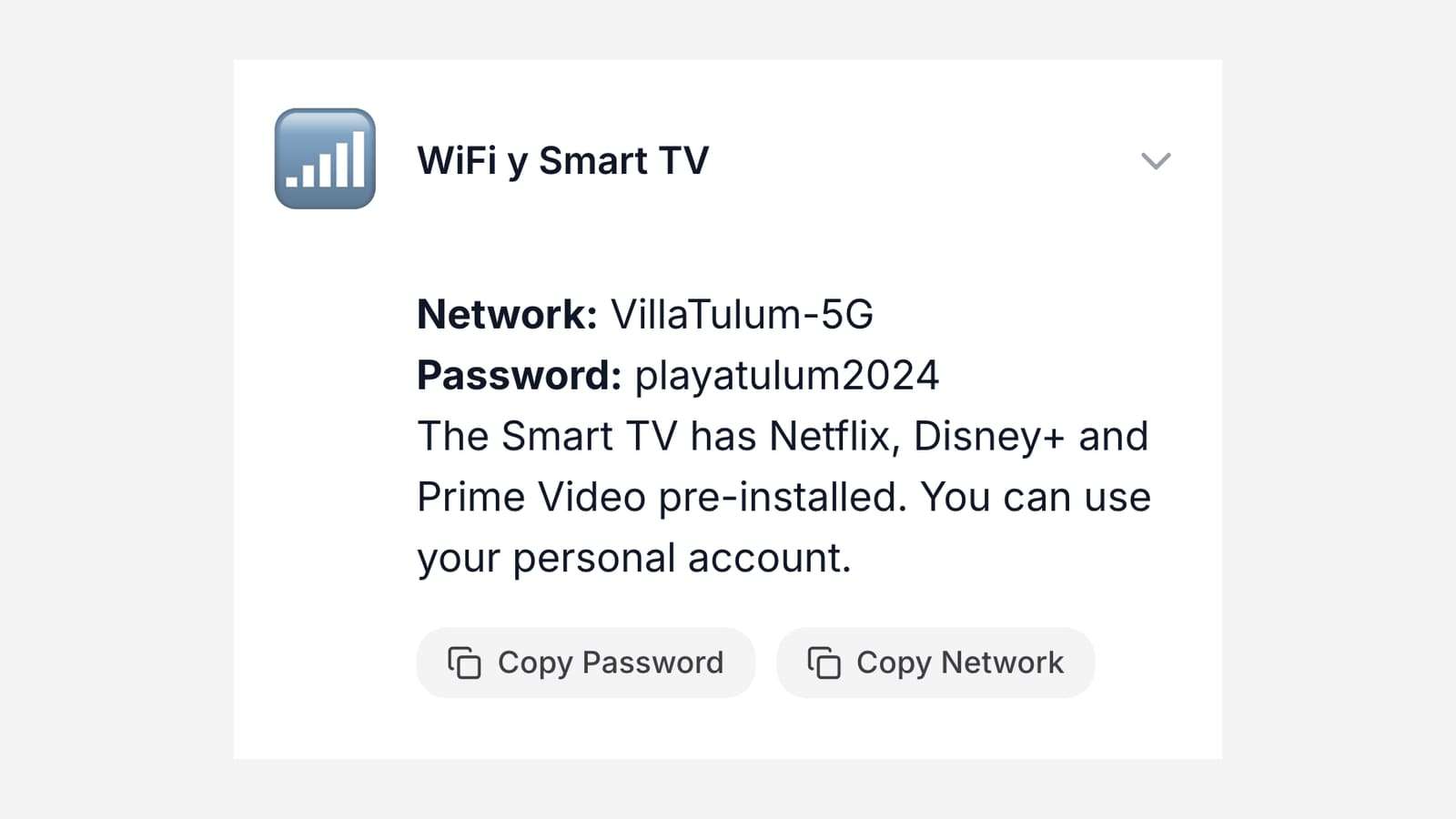
| WiFi | Network name and password as copyable text, not an image. Note if there is a separate guest network. | Handwritten credentials in a photo. The guest cannot copy them and will type the password wrong at least once. |
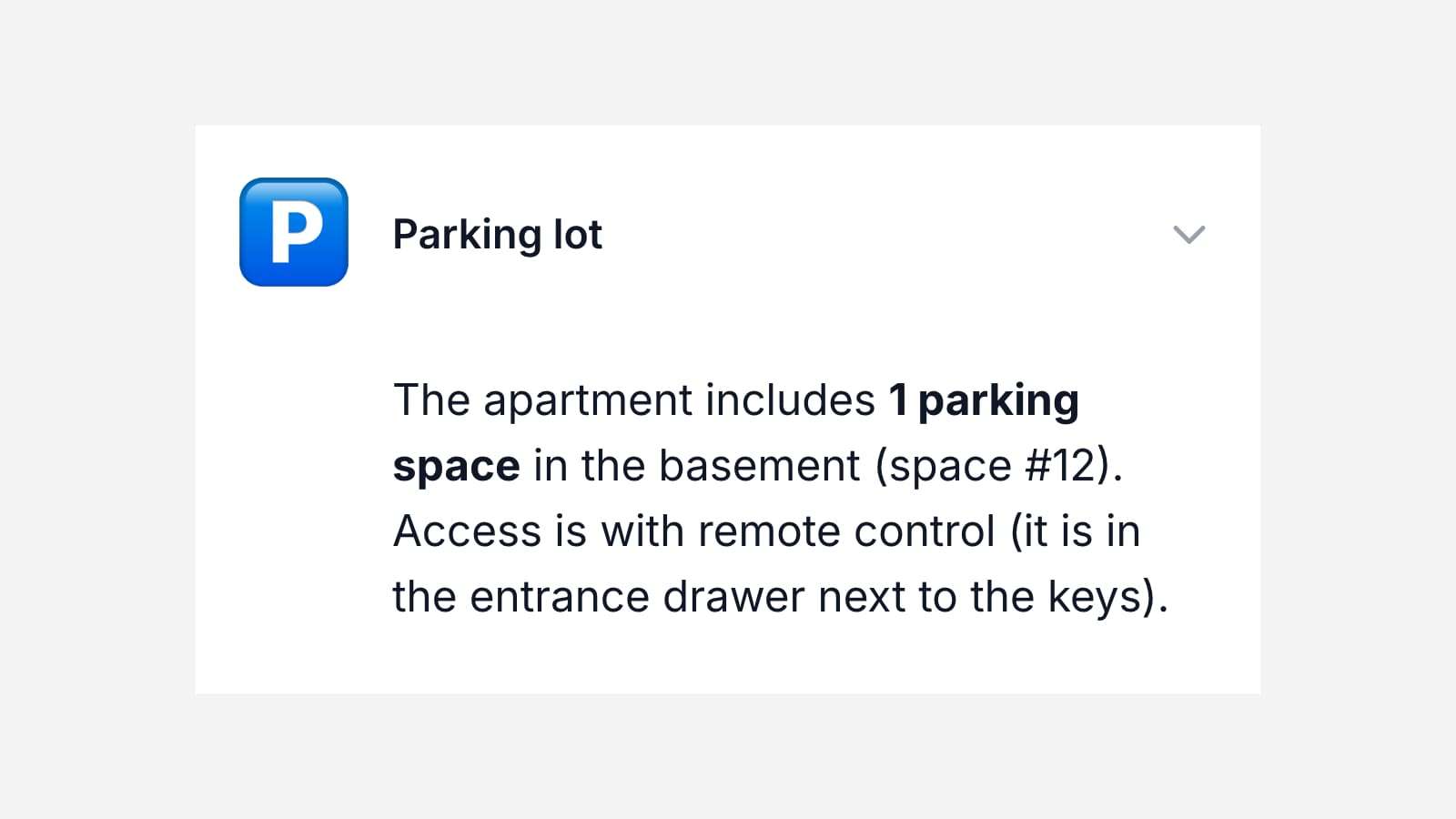
| Parking | Where to leave the car, whether a permit is needed, and what the street rules are on the day they leave. | Omitting the day the street cleaning happens, which is how guests get fined. |
| Appliances | The three or four things that are not obvious: the induction hob, the coffee machine, the heating, the washer. | Reproducing the manufacturer's manual. Write only the part that confuses people. |
| House rules | The nine Airbnb already standardises, plus anything genuinely specific to your place. | Restating the whole platform policy. See the next section. |
| Safety | Where the extinguisher, the smoke alarm, the stopcock and the fuse box are. The local emergency number. | Skipping it because it feels unlikely. It costs one paragraph and it is the section that matters most on the one night it matters. |
| Checkout | The time, what to do with keys, rubbish, towels, and whether the dishwasher needs emptying. | A long list of chores. Ask for three things and the guest does three things. Ask for nine and they do none. |
| Around here | Five or six real recommendations with walking times. The bakery you actually use. | A generic list of the top attractions. The guest already has a map application. |
The order is not arbitrary. It follows the sequence a guest moves through: arrive, connect, settle, live, leave. When we looked at which sections guests opened in real sessions, check-in and WiFi came out tied at the top, though that was a sample of six sessions and is far too small to call a trend. I wrote up what those sessions actually showed separately, sample size and all.
The nine house rules Airbnb already standardises
This is the section hosts most often write from scratch, and they do not need to. Airbnb defines a set of standard house rules that every guest agrees to, and they cover most of what a typical welcome book spends a page on.
According to Airbnb's help centre on adding house rules, the standard categories are pets, events, smoking and vaping, quiet hours, check-in and checkout times, check-in method, maximum number of guests, commercial photography and filming, and Airbnb Services allowances.
The same page notes that house rules are already shown to guests in four places: the listing description, the booking terms at the moment of booking, the automated guest emails, and the Arrival Guide that arrives before the trip. Airbnb also publishes a separate set of ground rules for guests, which include respecting the approved number of guests, the check-in window, quiet hours, and any no-smoking or no-pets designation.
So the guest has seen your rules four times before they open your welcome book. Repeating all nine in full is wasted space.
What earns its place is the specific version. Not "quiet hours apply" but "the neighbour below works nights, so the washing machine is off after ten". Not "no smoking" but "the balcony counts as inside for this, because the smoke goes straight into the flat above". The platform handles the category. You handle the local detail that the category cannot express.
The safety page most welcome books skip
Of the welcome books I have read, safety is the section most likely to be missing entirely, and it is the cheapest one to write.
The US Fire Administration puts the stakes plainly: "When you hear a smoke alarm, you may have less than 2 minutes to get everyone outside and safe." Two minutes is not enough time to work out where the back door leads, in the dark, in a house you arrived at yesterday.
The same page gives the maintenance rule that applies to you rather than your guest: "Test smoke alarms every month and replace 9-volt smoke alarm batteries at least once every year."
Your safety section needs four lines. Where the smoke alarm is. Where the extinguisher is, if there is one. Where the water stopcock and the fuse box are, because a burst pipe at two in the morning is more likely than a fire. And the local emergency number, written out, because a guest from another country does not know it and will not guess it.
That is it. Four lines, once, and you never think about it again.
Printed, digital, or both
The honest answer is that it depends on your property, and anyone who tells you otherwise is selling something.
A printed binder works. It is always there, it needs no battery, no signal and no application, and an older guest will find it without instruction. It also goes stale the moment your WiFi password changes, gets coffee spilled on it, and cannot be updated without driving over.
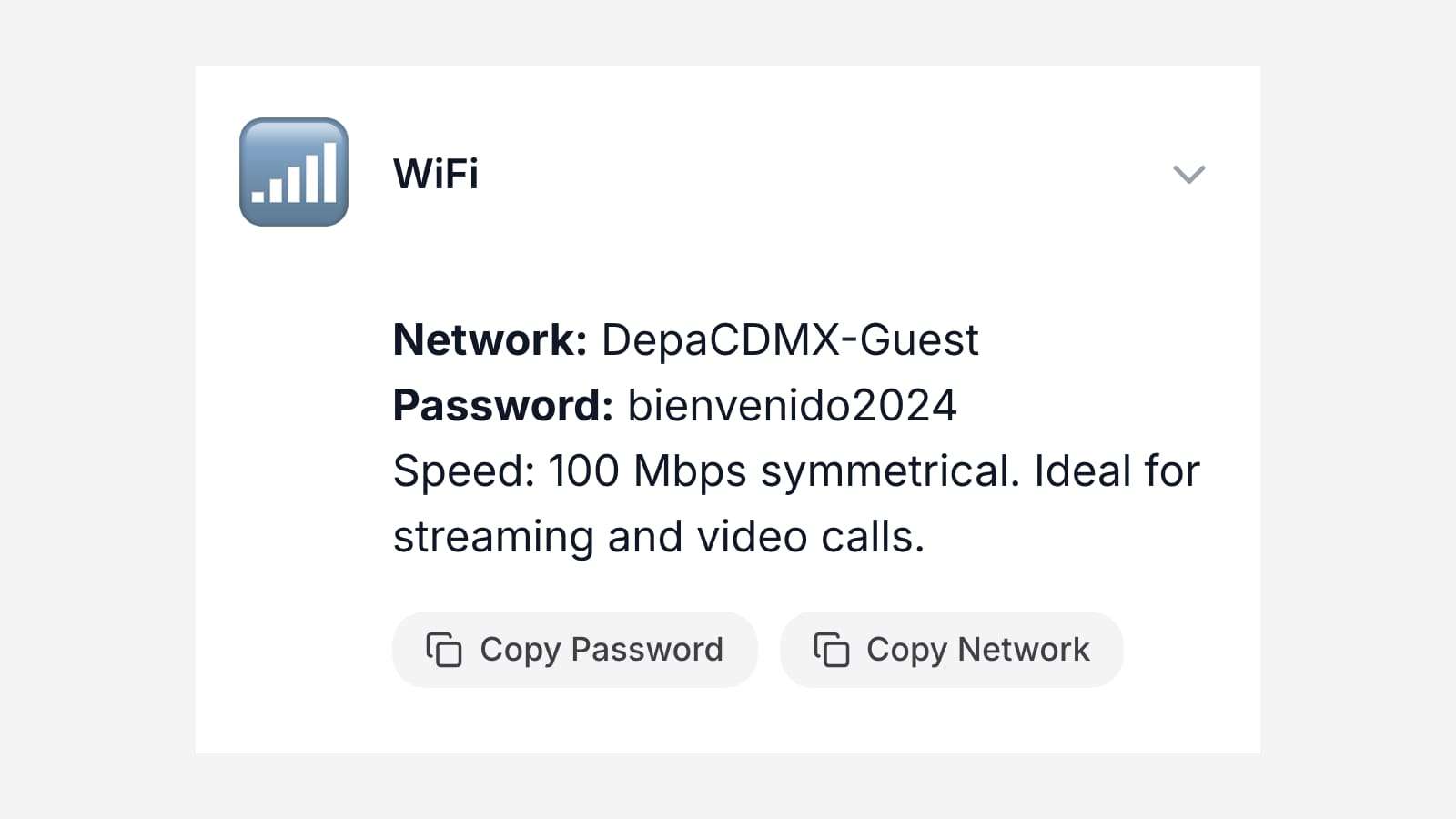
A digital guide behind a QR code has the opposite profile. You fix a typo once and every future guest sees the correction. You can put a map link in it, and a phone number that dials when tapped, and a password that copies to the clipboard instead of being typed wrong. It also fails completely if your guest cannot get online before they have the WiFi password, which is a real problem with an obvious fix.
The fix is to put the WiFi credentials somewhere physical as well. A small card by the router, or a line on the printed check-in note. Everything else can live digitally.
Most hosts I know end up with one page on paper and everything else on a phone. That is not a compromise, it is the correct answer: the paper carries the two things needed before connectivity exists, and the screen carries the rest.
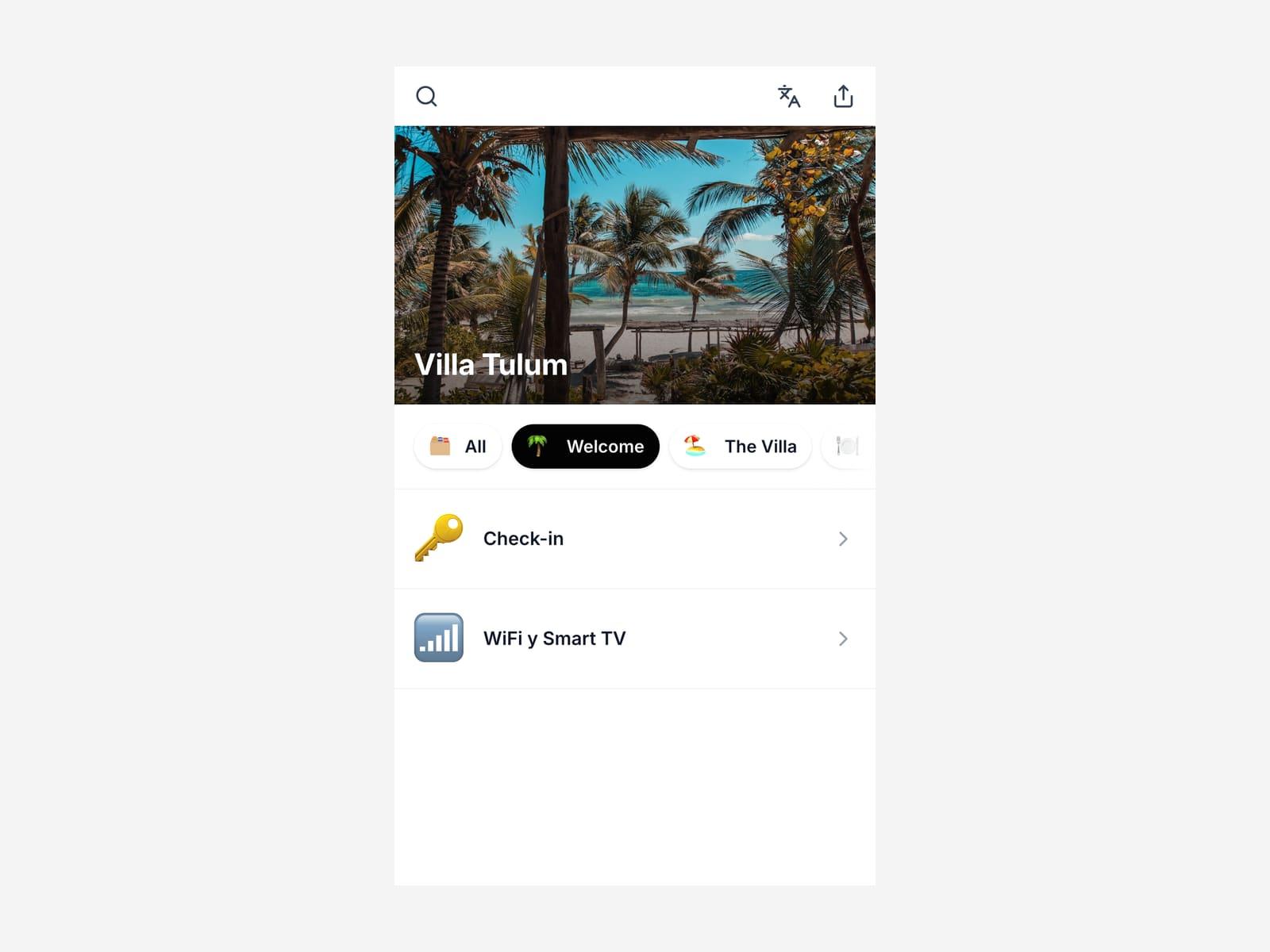
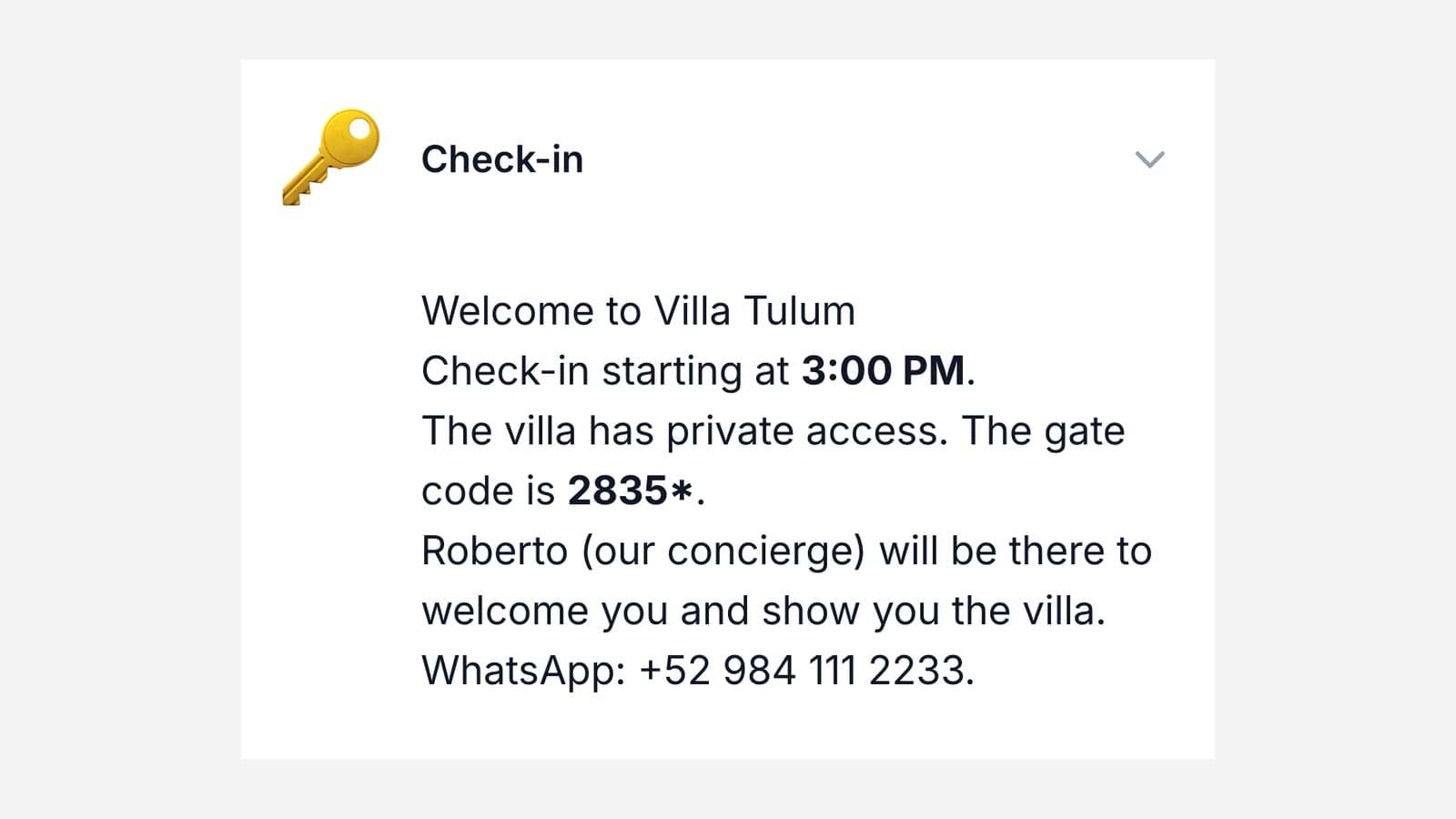
If you want to see how the digital half reads on a phone before you build one, there is a live example here. It is a demo property, so the gate code is not real.
Building it in an afternoon
The work is smaller than it looks, because most of the content already exists in your message history.
Open the conversations from your last ten guests and read what they asked. That is your table of contents, in order of frequency, written by the people who will use it. Nearly every host discovers the same thing: the questions are boringly repetitive, and four or five of them account for most of the volume.
Write the answers once, in the words you already used when you answered them individually. Do not formalise the tone. "The gate sticks, push it hard" is better documentation than "guests may experience resistance when operating the entrance gate".
Photograph the things that are hard to describe. The door. The fuse box. The button on the coffee machine. A photograph removes an entire paragraph and never gets misread.
Then send it before arrival, not on arrival. A welcome book discovered on the kitchen table has already failed at the one moment it was needed most, which was the door. If you want the arrival itself to run without you, automating the check-in message is the piece that makes the rest work.
Where welcome books go wrong
Four failures account for nearly all of the bad ones.
The first is length. A welcome book that opens with a personal essay buries the gate code under three screens of scrolling. Put the useful things first and your personality in a single warm sentence at the top.
The second is out-of-date information. The WiFi password changed, the bin day moved, the recommended restaurant closed during the pandemic and never reopened. Every wrong entry costs you a message, which is exactly what the document was supposed to prevent. This is the strongest argument for a digital version, and it is a stronger argument than any feature list.
The third is writing for the wrong reader. Hosts write welcome books for a guest who has arrived rested, in daylight, with time to read. The real reader is tired, holding a suitcase, and looking for one specific fact.
The fourth is treating it as decoration. A beautifully designed binder that does not say which of the three keys opens the front door is worse than a plain text file that does. Design helps only after the content is right, and the content is right when a stranger can find any single fact in under fifteen seconds.
If you want the longer version of that argument, I wrote about how to structure a guide people actually read.
Sources
- Airbnb Help Centre, Add house rules to a listing: the nine standard house rule categories and the four places guests are shown them.
- Airbnb Help Centre, Ground rules for home guests: the standards every guest agrees to.
- US Fire Administration, Smoke Alarms: monthly testing, annual battery replacement, and the two-minute figure.